Study guide
The Regitra theory exam: what to expect and how to prepare
In the theory exam, you need to recognize the situation, apply the rule, and select all appropriate answers. Learning only the answer to a familiar image is not enough. Here you will find the exam format, learning plan and a way to check if you understand the topics sufficiently well.
Short
- B category: 30 questions / 30 minutes
- Passing limit: At least 24 out of 30 questions
- Result: Valid for no longer than 1 year
Short B category theory exam
- Question: How many questions?
Answer for B category: 30 general topics questions. - Question: How long?
Answer for B category: 30 minutes. - Question: How many correct answers are needed?
Answer for B category: At least 80 %, that is at least 24 correct answers out of 30. - Question: How many questions can be answered incorrectly?
Answer for B category: Up to 6, maintaining no less than 80 % result. - Question: How long is a positive result valid?
Answer for B category: Until the passed practical exam, but no longer than one year.
The format is set by the theory knowledge check procedure, and the validity of the result is explained „Regitra“. AM, A1, A2 and A categories include 5 specific questions, C and D categories – 10 each. Therefore, the 30-minute rules for B category cannot be automatically applied to all categories.
One question may have more than one correct answer
A question is considered correct only when all correct answers are marked and no incorrect answers are selected. If you selected one correct answer but missed another, the entire question is considered incorrect. This is an important difference between "I know this answer" and "I answered the entire question correctly." This evaluation condition is stated in the execution order 8 point.
While studying, read each option separately and ask yourself: does it fit exactly these conditions? Do not finish the task upon recognizing one familiar statement. If you are unsure about the word 'must', 'can' or 'is prohibited', return to the rule: these words change the meaning of the question.
What is the point of learning without road signs and intersections?
Official topics cover the application of traffic rules, principles of safe driving, behavior of drivers and other road users, vehicle safety and environmentally friendly driving. Content is stated in the official theory topics scheme. It is convenient to arrange the study plan into five groups:
- Traffic order: signs, signposting, traffic lights, traffic controller, intersections and maneuvers.
- Risk recognition: visibility, speed, distance, pedestrians and other vulnerable road users.
- Driver's condition: Attention, fatigue, emotions and reaction.
- Car safety: Tires, braking, lights, load, passengers and safety measures.
- Actions in an unusual situation: Breakdown, danger or traffic incident.
This division is for learning; it is not a promise of how many questions on specific topics you will get in your test.
Learning cycle: topic → explanation → task → return
- Select one topic. First read the rule or watch the corresponding lesson. Write down the most important conditions.
- Complete the topic tasks. At first, it is more important to argue the answer than to rush.
- Analyze doubts. Mark the tasks you answered correctly by guessing.
- Return the next day. Check the same rule in another situation.
- Complete the mixed test on time. This will assess not only your knowledge, but also your ability to switch between topics.
A sample session may last 30–40 minutes: a short repetition of previous mistakes, one new topic, and several tasks with explanations. Adjust the duration according to your attention span and schedule. This is a learning recommendation, not a mandatory norm or guaranteed preparation time.
How to study from mistakes, not just repeat the same tests?
Turn the mistake into a short explanation. The note should include not only the test number, but also the reason why you made the mistake.
- What happened?: I didn't know the rule.
What to change while learning?: Go back to the topic and find an accurate explanation of its application. - What happened?: I knew it, but didn't notice the sign.
What to change while learning?: Before answering, systematically review the entire situation. - What happened?: I chose the second correct option.
What to change while learning?: Evaluate each answer separately. - What happened?: I answered based on memory from a similar image.
What to change while learning?: State how the conditions differ and why the decision changes. - What happened?: I rushed or didn't delve into the question.
What to change while learning?: Practice a steady pace and read the task thoroughly.
Repeating the same test can improve the result, although the weak topic remains. A more genuine sign of progress is correctly solving a new situation based on the same rule.
How to understand that you are prepared?
- In different mixed tests, the result consistently exceeds the exam limit, not just once reaching it.
- You can briefly explain why each chosen answer is appropriate.
- There is no topic that you systematically tried to guess.
- You fit into the time calmly reading and reviewing answers.
- Changing a situation detail, you can re-evaluate the decision.
When learning, it is worth aiming for caution above 80 %, but no result on our or another learning platform guarantees passing the exam. The main criterion – applying the rules. Check your knowledge for free KET test, then return to the topics where you doubted the most.
What to expect on exam day?
Check in advance the location, documents and arrival information. At the exam centre, your identity is checked, the procedure is explained and a place is assigned. Leave prohibited items where the staff indicates; phone and study notes are not suitable for the exam. The confirmed procedure can be found in the implementation guide, and the preparation documents – in the registration guide.
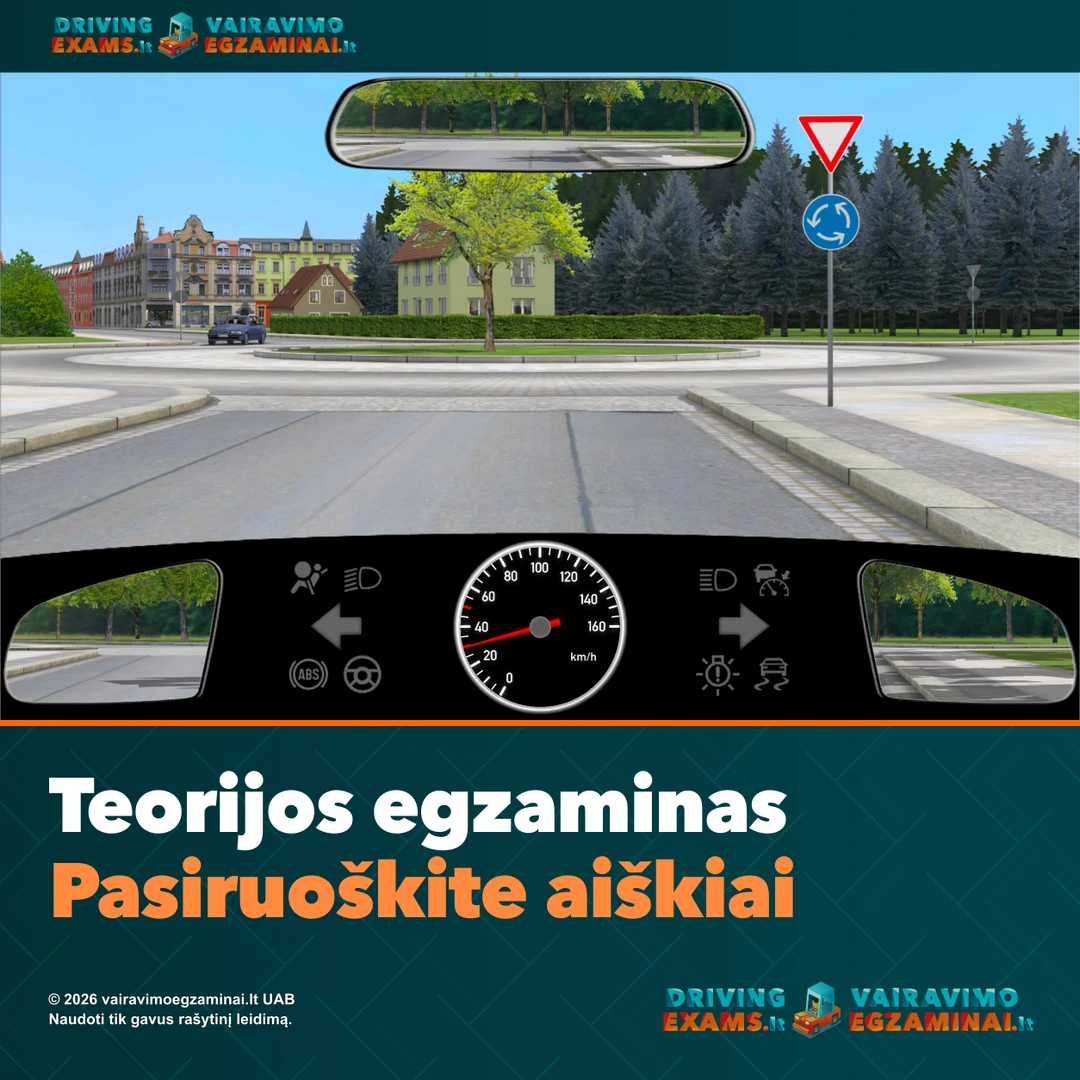
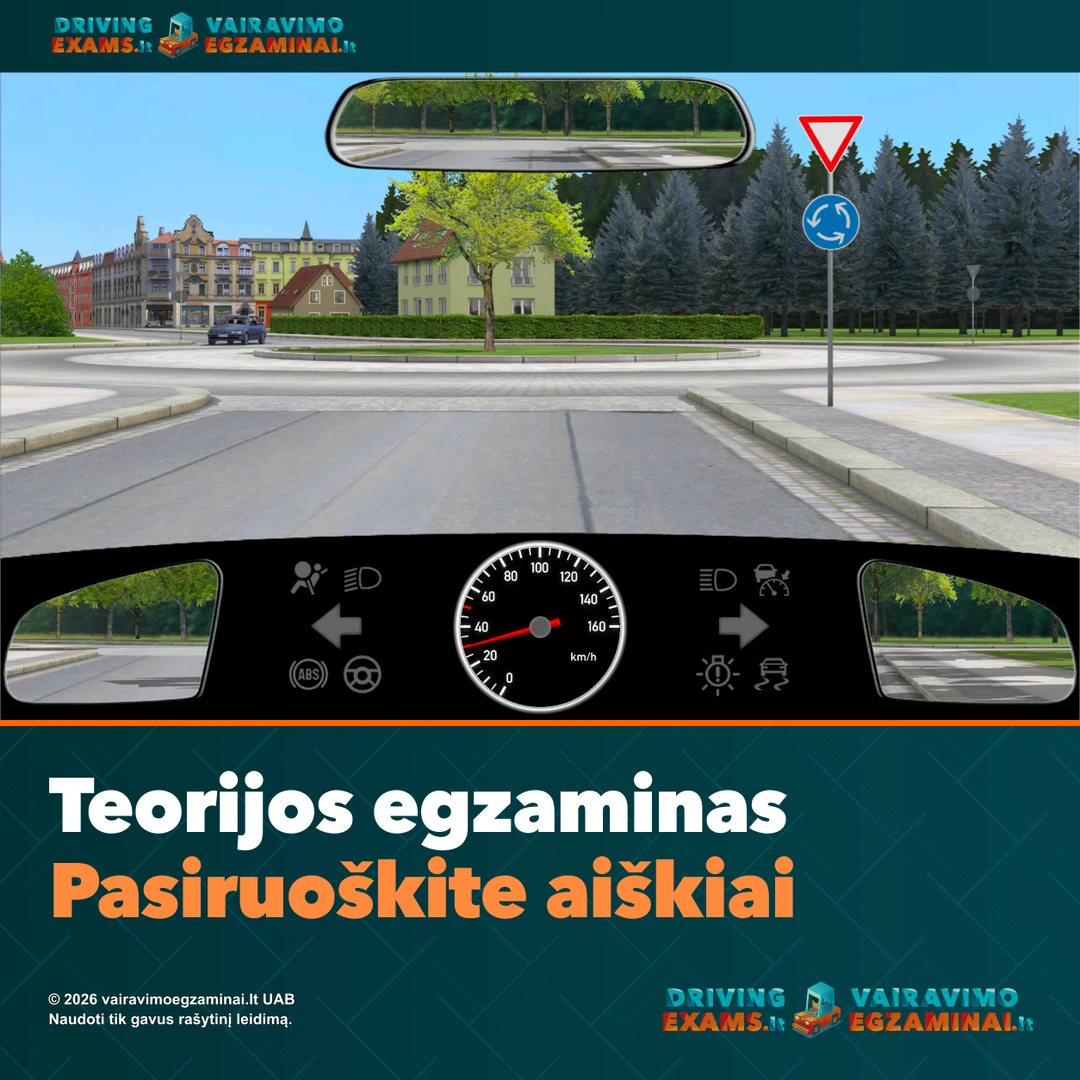
Once you start the test, focus first on the question. Evaluate the picture from your driving direction and the overall situation perspective. Do not change your answer just because you started doubting: first mention a specific rule or unnoticed detail. If you don't understand the technical control test, ask the staff member before the start of the test.
What to do after the result?
If you pass, plan the next learning stage and consider the validity of the theory. If you don't pass, don't start everything from scratch without a clear goal: note which types of situations were the most difficult, and fix the mistakes. The exam evaluation can be reviewed according to the established procedure; follow the exam conditions description and the information provided in place.
Our learning tasks are designed to understand KET. They are not provided as an official or identical "Regitra" question bank. When preparing, it is most useful to compare the logic of the rules, not to look for a mnemonic to remember that the same picture or sentence will appear in the exam.
My theory preparation test
Mark it for yourself. This list helps plan your learning.
- I explain the answer, not just recognize the picture.
- I evaluate each answer option separately.
- I know the reasons for my recurring mistakes.
- I solve new situations of the same topic independently.
- I finish different mixed tests calmly and on time.
Frequently asked questions
Can I make 6 mistakes in the B category exam?
24 correct answers out of 30 questions make up 80%, so the passing limit allows up to 6 incorrect answers. A question with only partially marked correct answers is also considered incorrect.
How long does the theory exam result remain valid?
A positive result is valid until the practical exam is passed, but no longer than one year. Plan your practical training leaving time for learning and possible retake.
Do I have to learn all KET topics?
Prepare for the official program applicable to your entire category. Learning one intersection and signs does not cover all the knowledge being tested.
Are the training tests the same as 'Regitra' questions?
Here you solve tasks intended for learning and analyze traffic situations. It is not possible to guarantee that their formulations or pictures will match the specific official exam test.
What to do if I get a good result but still guess a lot?
Guessing can also result in correct answers, which are learning gaps. Mark them and try to explain the rule without answer options. Only then proceed to the new task of this topic.
Choose the next step
Use the answer found in this guide: plan one specific action for today.
Where to continue?
Free KET test → KET with explanations → Registration for exams → Practical exam →
Sources and information check
Sources check: 2026-10-16. Check changing exam conditions before registering.
- Guidelines on the composition, evaluation, and implementation of driver theory knowledge test questions, revised from 2025-02-11
Checked 2026-10-16. - „Regitra“: theory exam topics and evaluation
Checked 2026-10-16. - Motor vehicle driver examination conditions and regulations description, edition from 2026-02-09
Checked 2026-10-16. - „Regitra“ driver portal – exam registration
Checked 2026-10-16.