Study guide
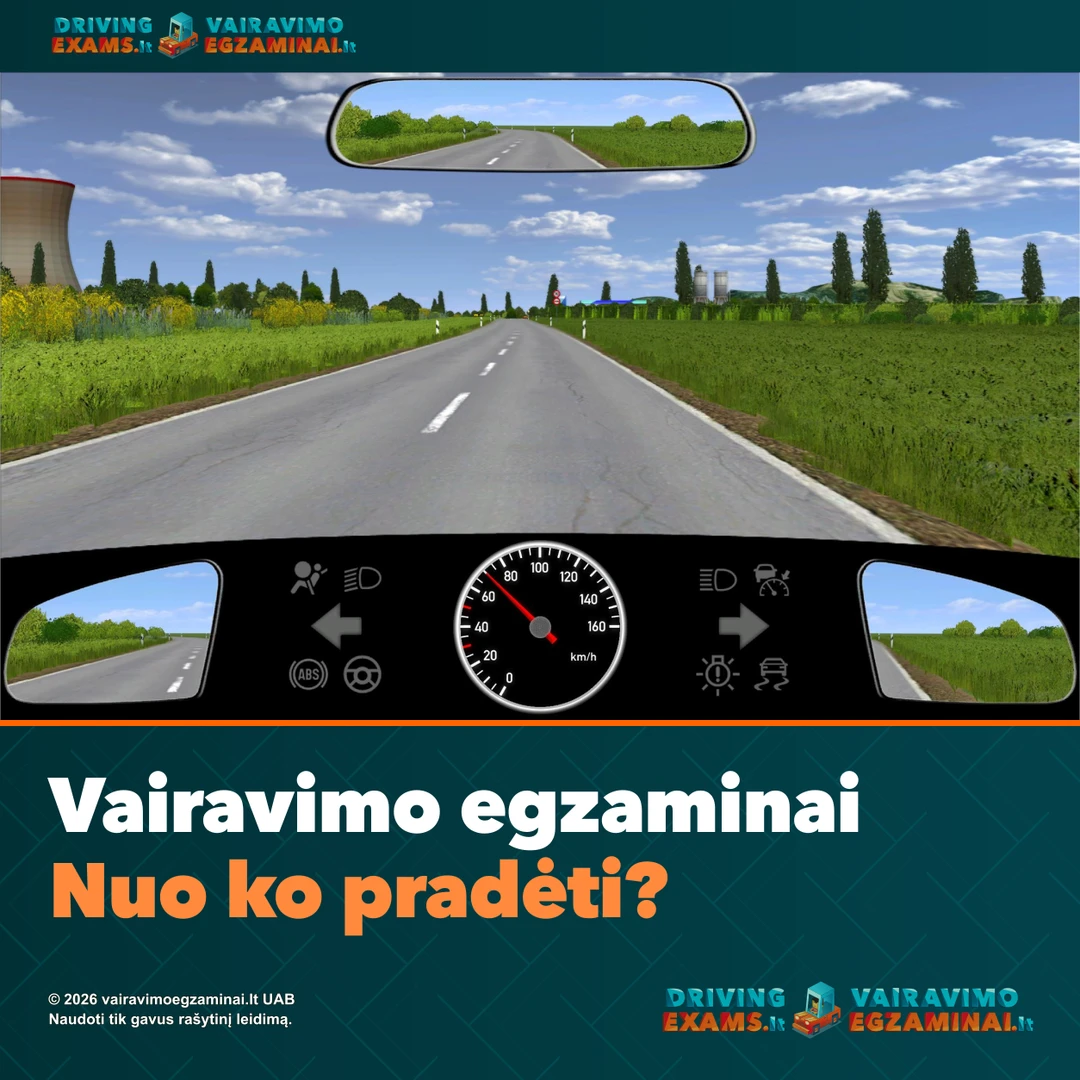
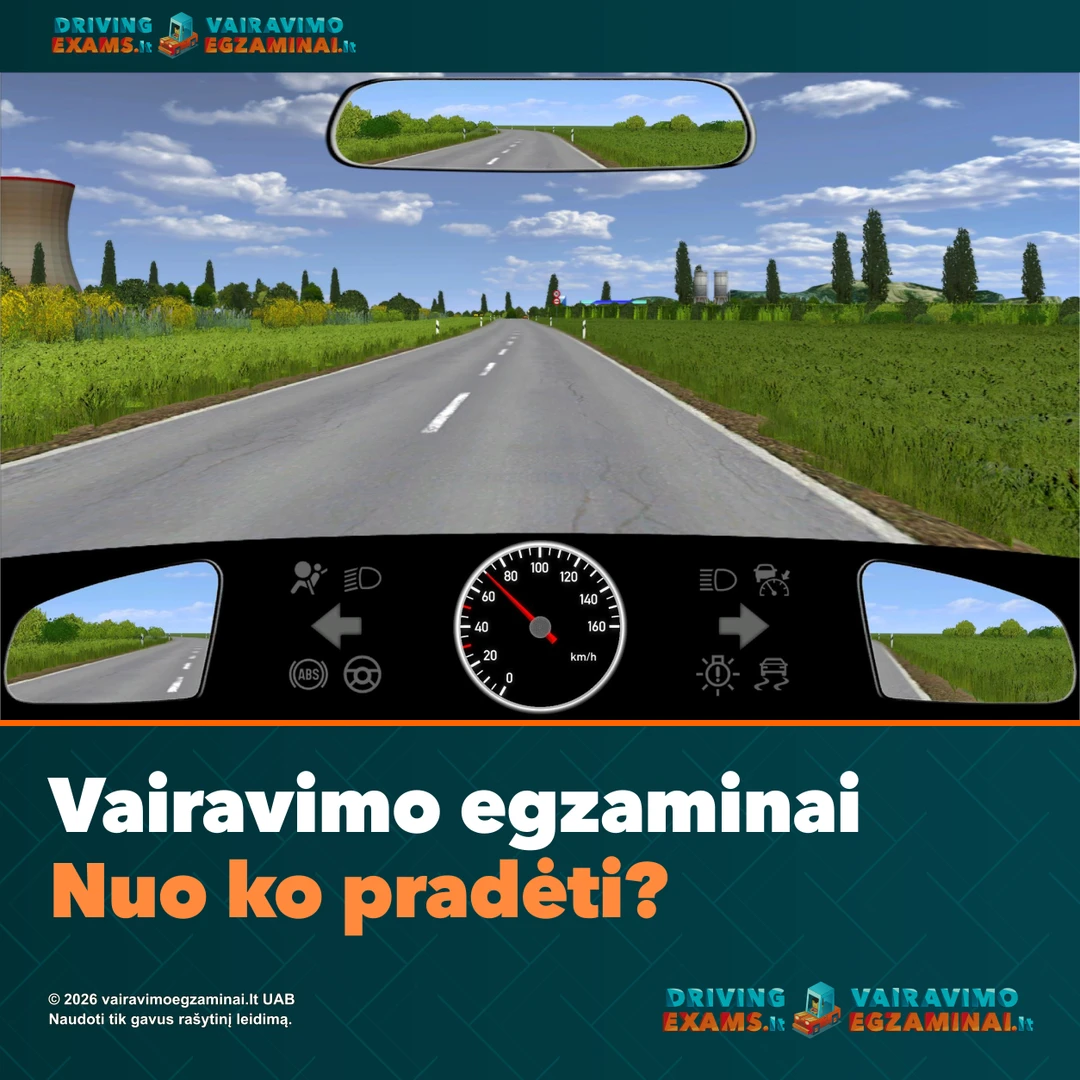
Driving exams: where to start and how to prepare
When preparing for the driving license for the first time, most uncertainty is caused by the sequence of tasks: when to choose a school, whether theory can be studied independently and when to register for the exam. This guide will help you organize the path from the first decision to the application for the license. First, choose the category, then the method of learning and only then plan specific exam dates.
Short
- First: Choose the category
- Then: Theory and practice path
- Finally: Exams and license
Your path to the driving license
- Decide what you want to drive. From the category depends the age, the necessary already existing rights, the training program and the exam vehicle.
- Check the conditions and documents. Plan a health check, first aid training, and determine if there are any additional requirements applicable to your situation.
- Choose a way to study theory. A driving school or self-study must comply with the rules of the chosen category.
- Study theory and practice according to the chosen path. Their order depends on the learning method; this is discussed in more detail below.
- Pass the required "Regitra" exams. A driving school entry and the state exam are different stages.
- Order a certificate and check its validity. Successfully completing an exam is not the final administrative step.
The conditions for granting a licence are set by The Road Traffic Safety Act, and the learning process – The Driving Instruction Regulations.
Which category is needed for your goal?
- Your goal: Motorcycle
From where to start: Choose A1, A2 or A category
Important difference: Important motorcycle power limitations, age and existing experience. - Your goal: Light vehicle
From where to start: B category
Important difference: Standard route for the first car driver's certificate. - Your goal: Truck
From where to start: C category conditions
Important difference: You need to already have B category; category and professional qualification are separate subjects. - Your goal: Truck with heavier trailer
From where to start: CE category conditions
Important difference: To obtain the licence, C category is required. - Your goal: Bus
From where to start: D category requirements
Important difference: You need B category; minimum age depends on qualification in certain cases.
This is a selection guide, not a full list of category definitions. Exact vehicle limits and age conditions can be found in Article 23 of the law. If your goal is a car for daily use, continue reading B category guide.
Theory class or self-study?
B category theory can be prepared self-study. On this route, the theory exam is first conducted at Regitra, and then practical training is done at the driving school. If you choose the full driving school course, theory and practice are organized according to the school's program and set conditions. Self-study theory does not replace practical training at the driving school. These differences are defined by points 5, 15 and 16 of the training regulations.
Choose according to your preferences. If you need a clear schedule and the opportunity to ask questions immediately, a teacher-led theory is useful. If you study consistently and can manage your time yourself, a self-guided path with explanations and consultations is suitable. In both cases, the goal of learning is the same: to understand the rules and apply them in an unfamiliar situation.
What to do specifically in the first week?
- Note down the target category and real time for studying per week.
- Check the organization of health check-ups and first aid training.
- Compare the schedules of several schools, gear box selection, and contract terms.
- Allocate the first session to KET concepts, signs, and traffic regulation principles.
- Complete the free KET test and note down not only the result but also unclear topics.
- Create error notes: topic, wrong thought, correct rule, new situation example.
The result of the first test does not need to be assessed as a conclusion. Its purpose is to show where to start. If many errors occur at intersections, do not rush to solve a few random tests: allocate one session for right of way and check the same topic again.
Plan your time and the entire driving school budget.
There is no one-size-fits-all term for 'passing the test'. The duration of the course depends on your initial knowledge, the school schedule, the need for practical training, and the availability of free exam slots. Plan backwards from your desired period, leaving room for additional practice and possible retakes.
Separate the budget for the training course, additional lessons, health check-ups, first aid training, exams, and certificate issuance. The cost of the school package does not necessarily include all these expenses. Check the exam fees in the official Regitra price list, and in the contract, request clearly stated additional lessons and lesson cancellation conditions. The lowest advertised price does not show how much your chosen path will cost.
How to combine KET knowledge with driving?
While learning a new topic, link it to one driver's action. Changing lanes means not just a turn signal, but also observation, appropriate distance, and predicting the actions of other road users. A lane change is not just a sign in the picture: it is important to spot a person in time and choose the appropriate action for the situation.
After the practical lesson, note down three situations that caused the most doubts. Return to the relevant KET topic and solve it by explaining your solution in your own words. Learning for the tests starts to help with real driving. Here are two useful separate guides: preparation for the theory exam and preparation for the practical exam.
When is it worth registering for an exam?
Plan your registration when you have a clear idea of not only the desired date but also the preparation. For theory, it is important to consistently solve different topics and be able to justify answers. For practical, discuss with your instructor whether you can act independently in various traffic conditions.
B category theory exam can be taken from the age of 17, and practical – from 18; age requirements and learning opportunities are confirmed by LTSA learning information and law. The theory passed remains valid until the practical exam, but no longer than one year. Therefore, do not study too early if you cannot dedicate time to practice in the near future. The registration process and list of documents can be found in a separate registration guide.
Choose one of the nearest steps
If you do not yet know how much you are paying, start with a short test. If you have already studied, select one unclear topic and dedicate today's session to it. If you are preparing for practice, after the next lesson, ask for specific feedback: what you are doing on your own, and what still needs to be reminded.
Preparation becomes clearer when each session has a small goal. Instead of "today I will study KET", choose "today I will explain what has priority in three different intersections." Such a goal allows you to see real progress and easier decide what to do next.
First week plan
Mark it for yourself. This list helps plan your learning.
- I have chosen the desired category.
- I compared learning methods and school conditions.
- I planned a health check and first aid course.
- I set the first KET topic.
- I noted when I can start learning this week.
Frequently asked questions
Can I study KET without having chosen a driving school?
Yes, you can get familiar with KET and study general topics right away. For B category theory, self-study is allowed. Check the mandatory practical and other category learning conditions according to your chosen path.
Does passing theory already allow driving a car alone?
No. Passing theory does not replace the right to drive upon obtaining a license. Learning with an instructor or family member is possible only by following the set learning conditions.
Is the same learning process applicable to all categories?
No. It differs by age, existing category requirements, learning scope, and exam vehicle. This guide provides a general path, and specific conditions are evaluated according to the category and your existing rights.
Do I need to buy the longest learning plan right away?
First, try out the learning method and evaluate your schedule. Choose a period during which you can consistently study, and read the content and usage conditions of the purchased product.
Choose the next step
Use the answer found in this guide: plan one specific action for today.
Where to continue?
B category → Theory exam → Practical exam → Registration for exams →
Sources and information check
Sources check: 2026-10-16. Check changing exam conditions before registering.
- Safe road traffic vehicles law, 2026-01-01–2026-10-31 edition
Checked 2026-10-16. - Driver training regulations description, 2021-09-17–2026-10-31 edition
Checked 2026-10-16. - LTSA: driver training
Checked 2026-10-16. - Motor vehicle driver examination conditions and regulations description, edition from 2026-02-09
Checked 2026-10-16. - „Regitra“: theory exam topics and evaluation
Checked 2026-10-16. - „Regitra“ exam fees and no-show conditions
Checked 2026-10-16.